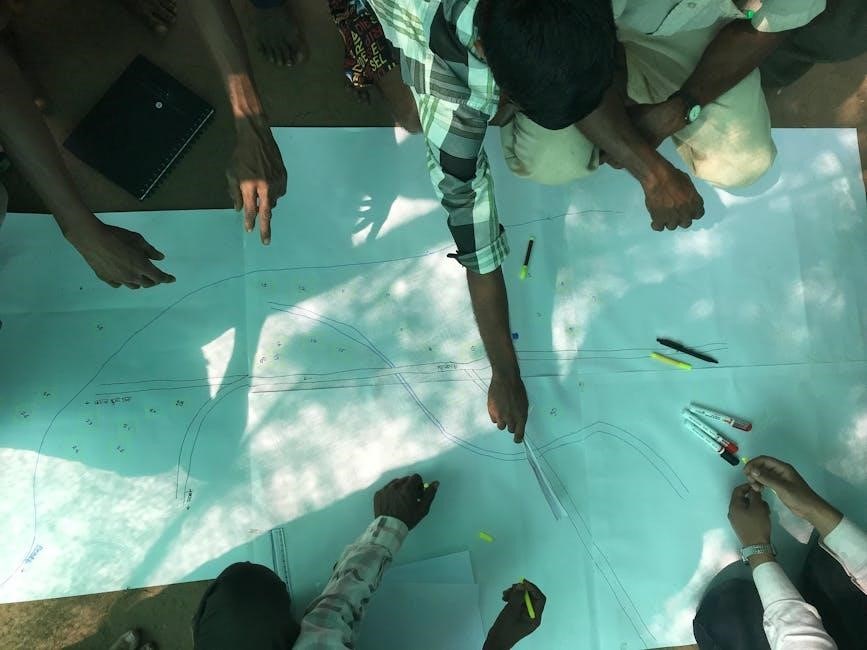
massdot project development and design guide
MassDOT Project Development and Design Guide: An Overview
MassDOT’s guide details engineering plans, specifications, and project development processes, covering highway and urban street designs, alongside crucial data integration techniques.
The Massachusetts Department of Transportation (MassDOT) Project Development and Design Guide serves as a comprehensive resource for professionals involved in transportation infrastructure projects throughout the Commonwealth. Originally documented around 2012, and continually updated, this guide consolidates engineering principles, design standards, and procedural guidelines essential for successful project delivery.
It’s a vital document for both MassDOT staff and external stakeholders – consultants, contractors, and municipalities – ensuring consistency and quality across all transportation initiatives. The guide’s origins trace back to the Massachusetts Highway Department, offering a legacy of established practices. It’s accessible online, facilitating widespread use and promoting best practices.
This resource isn’t merely a technical manual; it’s a framework for responsible project development, emphasizing adherence to regulations, environmental considerations, and public engagement. Understanding its contents is paramount for navigating the complexities of transportation project implementation within Massachusetts.
Purpose and Scope
The primary purpose of the MassDOT Project Development and Design Guide is to establish a standardized approach to transportation project planning, design, and implementation across Massachusetts. It aims to ensure projects are delivered efficiently, safely, and in compliance with all applicable federal, state, and local regulations.
The scope of the guide is remarkably broad, encompassing all phases of project development – from initial concept and feasibility studies through detailed design, construction, and ultimately, project closeout. It covers a diverse range of project types, including highway reconstruction (like Massachusetts Avenue in Lexington), bridge rehabilitation (I-91 Viaduct Study), and public transportation enhancements (MBTA coach procurement).

Furthermore, the guide addresses crucial aspects like environmental review processes, traffic engineering, data management (SDF to Shapefile conversions), and the integration of sustainable design principles. It serves as a central repository of knowledge, promoting consistency and minimizing ambiguity throughout the project lifecycle.

Project Development Process
MassDOT’s process involves initiating projects, navigating distinct phases with key milestones, and adhering to rigorous environmental reviews for successful project delivery.
Initiating a Project with MassDOT
Beginning a project with MassDOT requires a clear understanding of the initial steps and necessary documentation. The process emphasizes careful planning and adherence to established guidelines. Successfully initiating a project hinges on outlining project benefits and potential impacts, a crucial component of the overall development process.
MassDOT’s webpage provides resources specifically dedicated to initiating highway projects, offering guidance on navigating the preliminary stages. This includes defining project scope, identifying stakeholders, and securing necessary approvals. Early engagement with MassDOT is vital to ensure alignment with state transportation goals and regulations.
Furthermore, understanding the project development process as a whole is paramount. This involves recognizing the interconnectedness of various phases and the importance of proactive communication. A well-defined initiation phase sets the stage for a streamlined and efficient project lifecycle, ultimately contributing to successful project outcomes and responsible infrastructure development within Massachusetts.
Project Phases & Key Milestones
The MassDOT project development process is structured around distinct phases, each marked by key milestones that ensure progress and accountability. These phases typically encompass planning, environmental review, design, and construction, with ongoing monitoring and evaluation throughout. Each milestone represents a critical decision point or deliverable, requiring thorough documentation and approval.
Successfully navigating these phases demands a collaborative approach, involving MassDOT staff, consultants, and stakeholders. Key milestones often include the completion of preliminary design reports, environmental impact assessments, and the securing of necessary permits. Adhering to established timelines and proactively addressing potential challenges are crucial for maintaining project momentum.
Effective project management, coupled with a clear understanding of the phased approach, is essential for delivering projects on time and within budget. Regular progress reviews and transparent communication contribute to a successful outcome, ensuring that projects align with transportation goals and benefit the Commonwealth of Massachusetts.
Environmental Review Process
MassDOT’s commitment to environmental stewardship is central to the project development process. The Environmental Review Process rigorously assesses potential impacts of transportation projects on the natural and human environment. This process adheres to both state and federal regulations, ensuring comprehensive evaluation and mitigation strategies.
Key components include identifying potential impacts on air and water quality, wetlands, historical resources, and communities. Public involvement is a vital aspect, with opportunities for feedback and participation throughout the review. Alternatives analysis is conducted to minimize environmental harm, exploring options that balance transportation needs with environmental protection.
The process culminates in the issuance of an Environmental Impact Report (EIR) or Environmental Assessment (EA), detailing findings and proposed mitigation measures. Compliance with environmental regulations is paramount, ensuring sustainable and responsible project delivery that safeguards Massachusetts’ valuable resources for future generations.

Design Standards & Specifications
MassDOT’s guide provides detailed engineering specifications for highways, urban streets, bridges, and structures, prioritizing traffic safety and efficient design implementation.
Highway Design Standards
MassDOT’s Highway Design Standards are foundational to ensuring safe and efficient transportation infrastructure across the Commonwealth. These standards encompass a comprehensive range of elements, from geometric design – including horizontal and vertical alignment – to pavement design, drainage systems, and roadside safety features.
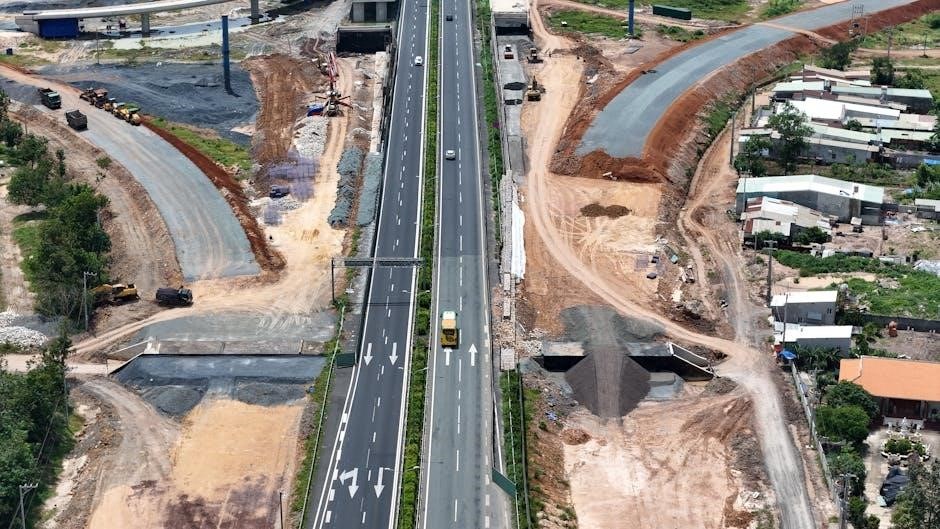
Detailed specifications are provided for lane widths, shoulder configurations, and clear zone requirements, all aimed at minimizing risks and accommodating diverse traffic volumes. The guide emphasizes adherence to current AASHTO (American Association of State Highway and Transportation Officials) guidelines, while also incorporating MassDOT-specific adaptations to address unique regional challenges.
Furthermore, the standards address considerations for capacity analysis, traffic modeling, and the integration of Intelligent Transportation Systems (ITS) technologies. Proper implementation of these standards is crucial for projects ranging from routine maintenance to large-scale highway reconstruction, guaranteeing long-term performance and public safety.
Urban Street Design Considerations
MassDOT’s guide recognizes that urban street design demands a nuanced approach, differing significantly from highway standards. These considerations prioritize multi-modal transportation, balancing the needs of vehicles, pedestrians, cyclists, and public transit users. Complete Streets principles are central, advocating for designs that accommodate all users safely and comfortably.
Key elements include pedestrian-friendly sidewalks, protected bike lanes, accessible curb ramps, and optimized signal timing to minimize delays. Context sensitivity is paramount; designs must harmonize with the surrounding urban fabric, considering land use, building density, and community character.
The guide also addresses traffic calming techniques, such as narrower travel lanes, speed humps, and raised crosswalks, to enhance safety and livability. Careful attention is given to stormwater management, streetscape aesthetics, and the integration of green infrastructure to create vibrant and sustainable urban corridors.
Bridge & Structure Design
MassDOT’s Project Development and Design Guide provides comprehensive standards for bridge and structure design, ensuring safety, durability, and cost-effectiveness. These standards align with the latest AASHTO (American Association of State Highway and Transportation Officials) guidelines and incorporate best practices in structural engineering.
The guide details requirements for load rating, material selection, corrosion protection, and seismic design. It emphasizes thorough inspections and maintenance programs to extend the service life of structures. Specific attention is given to the design of bridge decks, superstructures, and substructures, considering factors like traffic volume, environmental conditions, and potential scour.
Furthermore, the guide addresses the design of retaining walls, culverts, and other ancillary structures, ensuring their stability and integration with the surrounding roadway. Detailed specifications are provided for concrete, steel, and other construction materials, guaranteeing quality and performance.
Traffic Engineering & Safety
MassDOT’s guide prioritizes traffic engineering and safety throughout the project development process. It establishes standards for roadway capacity analysis, traffic signal timing, and geometric design to optimize traffic flow and minimize congestion. The guide emphasizes the importance of incorporating safety features such as clear zone areas, guardrails, and pedestrian crossings.
Detailed guidelines are provided for the design of intersections, roundabouts, and access points, considering factors like sight distance, turning radii, and vehicle speeds. The guide also addresses the needs of all road users, including pedestrians, bicyclists, and individuals with disabilities, promoting accessibility and inclusivity.
Furthermore, the document outlines requirements for traffic control during construction, ensuring the safety of workers and the public. It stresses the use of appropriate signage, pavement markings, and flagger operations to guide traffic through work zones effectively.

Data & Technology Integration
MassDOT leverages technology, including AutoCAD Map 3D, for spatial data conversion (SDF to Shapefile) and integration into highway project development and design workflows.
Converting Spatial Data Files (SDF to Shapefile)
MassDOT frequently utilizes spatial data in its project development and design processes. A common need arises to convert data between different formats, specifically from Autodesk’s Spatial Data File (SDF) format to the more widely compatible ESRI Shapefile format.
This conversion is crucial for interoperability with various Geographic Information System (GIS) software packages used for analysis, visualization, and data management. A white paper details a specific method for achieving this conversion within AutoCAD Map 3D.
The process involves leveraging the capabilities of AutoCAD Map 3D to import the SDF file and then export it as a Shapefile. This allows MassDOT engineers and designers to seamlessly integrate spatial data into their workflows, ensuring data consistency and facilitating effective project planning and execution. Proper conversion maintains data integrity for accurate project representation.
Utilizing AutoCAD Map 3D with MassDOT Data
MassDOT leverages AutoCAD Map 3D as a key tool within its project development and design workflows, particularly for handling and integrating spatial data. This software facilitates the management of large datasets essential for highway and urban street projects.
The integration of MassDOT data within AutoCAD Map 3D allows for efficient creation and modification of engineering plans. It supports the conversion of spatial data files, like SDF to Shapefile, enabling compatibility with various GIS platforms.
Engineers can utilize the software’s features for design, analysis, and visualization, ensuring projects adhere to established standards. AutoCAD Map 3D streamlines the process of incorporating existing infrastructure data, aiding in accurate project planning and minimizing potential conflicts. This technology enhances collaboration and improves overall project delivery efficiency for MassDOT initiatives.

Specific Project Examples & Studies
MassDOT studies, like the I-91 Viaduct and Massachusetts Avenue reconstructions, demonstrate practical applications of the guide, showcasing planning, alternatives, and public engagement.
I-91 Viaduct Study (Springfield, MA)
The I-91 Viaduct Study in Springfield, Massachusetts, represents a significant application of the MassDOT Project Development and Design Guide. A public meeting summary details the project’s core goals, focusing on the critical need to assess and potentially rehabilitate or replace the aging viaduct structure.
Central to the study was the evaluation of three distinct alternatives, each carefully considered for its feasibility, cost-effectiveness, and impact on the surrounding community. These alternatives were presented and discussed with stakeholders, demonstrating MassDOT’s commitment to transparent public engagement throughout the project lifecycle. The study exemplifies how the guide’s principles are applied in real-world scenarios, particularly concerning infrastructure assessment and long-term planning.
The process involved a thorough examination of traffic patterns, structural integrity, and environmental considerations, all aligned with the standards outlined within the MassDOT guide. Ultimately, the study aimed to identify the most sustainable and efficient solution for maintaining a vital transportation corridor.
Massachusetts Avenue Reconstruction (Lexington, MA)
The reconstruction of Massachusetts Avenue in Lexington, MA, showcases the practical implementation of the MassDOT Project Development and Design Guide, particularly concerning urban street design. The Lexington Historical Commission’s review of the proposed plans highlights the importance of balancing modern infrastructure needs with historical preservation concerns.
Commission members raised several observations and concerns regarding the project’s impact on the town’s character, demonstrating the need for careful consideration of aesthetic and cultural factors during the design phase. This aligns directly with the guide’s emphasis on context-sensitive design solutions.
The project likely involved detailed assessments of traffic flow, pedestrian safety, and accessibility, all guided by MassDOT’s established standards. The review process underscores the collaborative nature of project development, requiring coordination between MassDOT, local historical commissions, and the community to achieve a successful outcome that respects both functionality and heritage.

Public Transportation Projects
MassDOT prioritizes modernizing public transit, exemplified by the MBTA’s bi-level coach procurement, aligning with sustainable development and design principles outlined in the guide.
MBTA Bi-Level Commuter Rail Coach Procurement
The MBTA is undertaking a significant project to procure new bi-level commuter rail coaches, a crucial step in modernizing its aging fleet and addressing growing passenger demand. This initiative, detailed within the MassDOT Project Development and Design Guide’s framework for public transportation projects, aims to replace existing single-level cars with higher-capacity alternatives.
The procurement process considers not only the immediate need for increased capacity but also long-term sustainability and operational efficiency. The MassDOT guide emphasizes the importance of aligning such projects with broader transportation goals, including reducing congestion and promoting environmentally responsible practices. Key considerations include accessibility for all passengers, improved comfort features, and compatibility with existing infrastructure.
Furthermore, the project’s development adheres to rigorous safety standards and environmental review processes, as outlined in the guide. This ensures that the new coaches meet all applicable regulations and minimize their environmental impact. The successful implementation of this procurement will significantly enhance the commuter rail experience for thousands of daily passengers throughout the MBTA service area.

Sustainable Development & Design Principles
MassDOT increasingly integrates sustainable development principles into all phases of project planning and execution, as highlighted within the Project Development and Design Guide. This commitment extends beyond mere environmental compliance to encompass a holistic approach considering long-term economic, social, and ecological impacts.

The guide promotes practices like passive energetic design, resource conservation, and the utilization of sustainable materials. These principles aim to minimize the carbon footprint of transportation infrastructure and enhance resilience to climate change. Emphasis is placed on lifecycle cost analysis, evaluating the long-term benefits of sustainable choices over initial cost savings.
Furthermore, MassDOT encourages designs that prioritize pedestrian and bicycle access, reduce reliance on private vehicles, and support compact, mixed-use development patterns. The guide references resources like “Design for Research,” advocating for innovative architectural approaches. By embracing these principles, MassDOT strives to create a transportation system that is both efficient and environmentally responsible, contributing to a more sustainable future for Massachusetts.